Drywall is one of the most important building materials in any modern home. It creates smooth interior walls, provides fire resistance, and helps define the structure and finish of your living space.
However, despite its durability, drywall is still vulnerable to damage from everyday life. Issues like water leaks, accidental impacts, pest activity, furniture movement, and settling foundations can all leave visible or hidden damage behind.
When this happens, homeowners are often faced with an important question:
Should you repair the drywall or replace it completely?
The answer depends on the type of damage, its severity, and whether it affects the structure or appearance of your walls.
This guide will help you understand exactly when drywall repair is enough—and when a full replacement is the better long-term solution.
When Drywall Repair Is the Right Choice
Most drywall problems are minor and can be fixed quickly and affordably without replacing entire sections of your wall.
Common issues that can be repaired include:
- Small holes from nails, screws, or anchors
- Hairline cracks from normal house settling
- Minor dents or surface damage
- Scuff marks or shallow surface imperfections
- Nail pops or screw pops
- Light seam cracks between drywall panels
- Small cosmetic damage in low-traffic areas
In these situations, professional drywall repair can restore your wall to a smooth, seamless finish without major construction work.
Key benefit: Repairs are faster, less invasive, and more cost-effective.
When Drywall Replacement Is the Better Option
While repairs work for minor issues, some damage goes beyond surface-level fixes. In these cases, replacing the affected drywall section is the safest and most reliable solution.
You may need drywall replacement if you notice:
Water Damage
Leaks from plumbing, roofs, or windows can weaken drywall and lead to mold growth. Once moisture spreads inside the wall, replacement is usually necessary.
Large Holes or Structural Damage
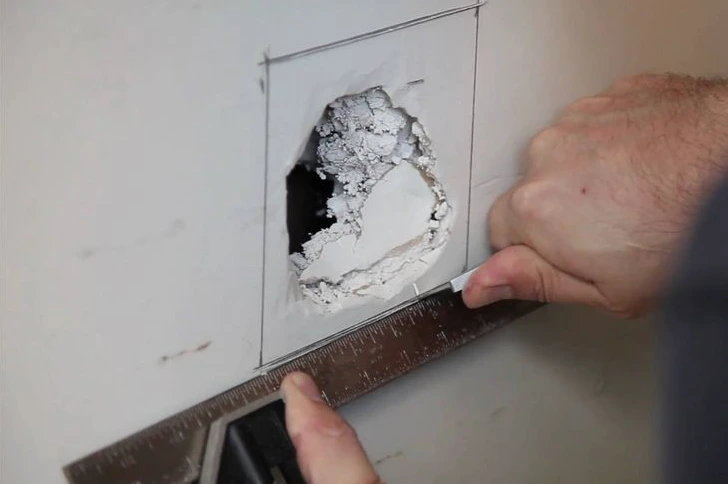
If the drywall has major holes, crumbling sections, or broken edges, patching may not provide a stable or long-lasting repair.
Repeated Repairs in the Same Area
If a section has been patched multiple times, the underlying issue may still exist. In these cases, replacement ensures a permanent fix.
Mold or Odor Issues
Musty smells, discoloration, or visible mold growth often indicate deeper moisture problems behind the wall.
High-Visibility Areas
In living rooms, entryways, or other prominent spaces, replacement may be preferred to ensure a perfectly smooth, uniform finish.
Drywall Repair vs Replacement: How to Decide
There is no single rule that applies to every situation, but here’s a simple guideline:
Choose Repair When:
- Damage is small and surface-level
- No moisture or mold is present
- The structure behind the wall is still solid
- You want a quick, budget-friendly solution
Choose Replacement When:
- Damage is large or deep
- Water or mold is involved
- The drywall feels soft or unstable
- A seamless finish is important
- Repairs have already failed in the same area
Rule of thumb: If the damage affects the integrity of the wall—not just the surface—it’s usually better to replace.
Why Professional Drywall Service Matters
Whether you need repair or replacement, professional workmanship makes a big difference in the final result.
At Dr. Domicile LLC, we ensure:
- Smooth, seamless wall finishes
- Proper damage assessment before work begins
- Matching texture and paint blending
- Clean, dust-controlled work areas
- Long-lasting repair and replacement solutions
Poor drywall work can leave visible patches, uneven textures, or recurring damage, so getting it done right the first time matters.
Our Drywall Repair & Replacement Process
We follow a simple, efficient process designed to minimize disruption to your home:
1. Inspection & Assessment
We evaluate the damage and determine whether repair or replacement is needed.
2. Professional Repair or Replacement
Our team uses the right tools and techniques to restore your walls with precision.
3. Finishing & Cleanup
We ensure smooth finishing, clean edges, and a spotless workspace when the job is done.
Final Thoughts
Drywall damage is common, but choosing the right solution is what protects your home’s appearance and structure.
- Small, surface damage → Repair is usually enough
- Serious, widespread, or moisture-related damage → Replacement is the better choice
If you’re unsure, a professional inspection can save you time, money, and future repairs.
At Dr. Domicile LLC, we help homeowners restore their walls with high-quality drywall repair and replacement services that last.